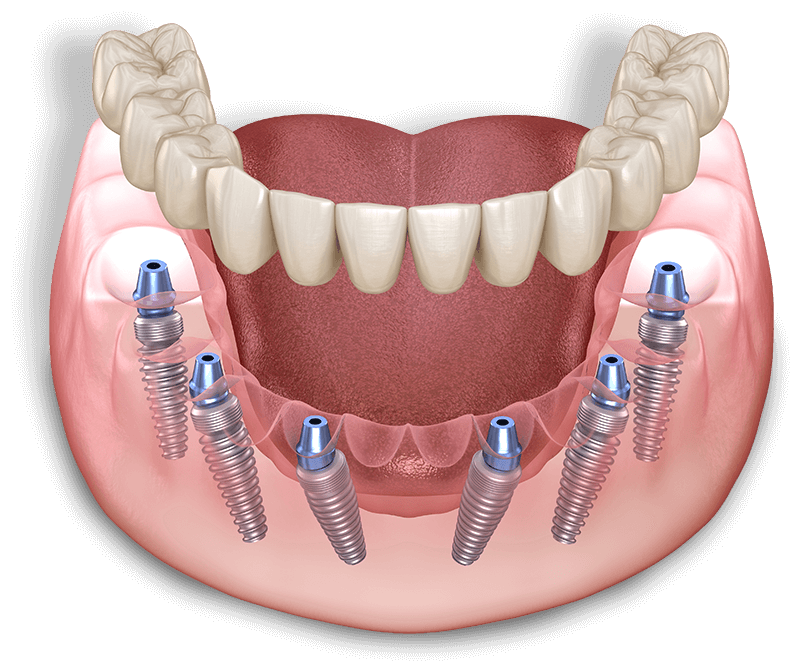
Full mouth dental implants are a complete solution for people who have lost most or all of their teeth. Many patients search for this option when dentures fail, pain is constant, or chewing and speech are affected. This article explains who benefits from full mouth dental implants, common symptoms and causes, how dentists diagnose and plan treatment, the main treatment options, recovery and prevention tips, and clear next steps you can take.
What Are Full Mouth Dental Implants?
Full mouth dental implants replace an entire arch (top, bottom, or both) of teeth using dental implants as anchors. Common approaches include:
- All-on-4 — four implants support a full-arch prosthesis.
- All-on-6 — six implants for added stability and load distribution.
- Implant-supported bridges — multiple implants support a fixed bridge across the arch.
- Individual implants with full-arch prosthetics — more traditional, one-tooth-for-one replacements when needed.
Compared to removable dentures and partial restorations, full-arch implants aim to restore chewing function, improve speech, and provide a more natural look and feel. They are designed for long-term stability and to prevent bone loss that follows missing teeth.
Who Needs Full Mouth Dental Implants in Fort Lauderdale, FL
Full-arch replacement is typically considered when multiple teeth are failing or already missing. Look for these signs:
- Loose, failing, or frequently infected teeth.
- Chronic denture problems: slipping, sore spots, or poor fit.
- Severe decay affecting many teeth or collapsing bite.
- Difficulty chewing, eating, or speaking clearly.
When tooth loss happens slowly (progressive periodontal disease), planning can start earlier to preserve bone. If loss is sudden (trauma or acute infection), treatment may need urgent attention and a faster path to restoration.
Causes & Risk Factors That Lead To Full Mouth Dental Implants
Major causes of widespread tooth loss include:
- Advanced gum (periodontal) disease.
- Widespread tooth decay and failed restorations.
- Trauma or severe injury to the mouth.
- Medical or congenital conditions that weaken teeth or bone.
Risk factors that speed up tooth loss include smoking, uncontrolled diabetes, poor oral hygiene, and long-term untreated periodontal disease. Addressing these risks improves implant success.
How Dentists Diagnose And Plan Full Mouth Dental Implants
Careful diagnosis guides predictable results. Typical steps include:
- Clinical exam and intraoral photos to assess soft tissue and teeth.
- Periodontal charting to measure gum health and pocket depths.
- X-rays and CBCT scans for 3D bone mapping and nerve location.
- Digital smile simulation and surgical guide planning to set implant positions and prosthetic design.
3D planning and guided surgery reduce surprises, protect vital structures, and help create prosthetics that fit and look natural.
Treatment Options For Full Mouth Dental Implants in Fort Lauderdale, FL
Conservative & At-Home Measures
Before definitive care, patients can improve their situation with better oral hygiene, temporary restorations, and pain control. These steps ease symptoms but are often a short-term bridge to implant therapy.
Professional Non-Surgical Treatments
Some teeth can be saved with root canals, crowns, or periodontal therapy. These treatments can stabilize the mouth and buy time, or they can be part of a staged plan that prepares the jaw for implants.
Surgical & Advanced Full-Arch Solutions
Surgical options range from staged implant placement to immediate-load full-arch restorations like All-on-4 and All-on-6. Additional procedures may include bone grafting or sinus lifts to rebuild bone for secure implants. On surgery day, expect local or oral sedation, guided implant placement, and temporary teeth in many immediate-load cases. Over weeks to months the final prosthetic is fitted and adjusted.
Recovery, Aftercare, Prognosis, And Prevention
Typical recovery milestones:
- First 48–72 hours: swelling and soreness peak; follow pain and antibiotic instructions.
- First 1–2 weeks: soft-food diet, gradual return to normal activities.
- 2–6 months: osseointegration (implant bonding to bone) and final prosthetic placement planning.
Prevent complications by avoiding smoking, following oral hygiene, and attending regular maintenance visits. Watch for signs that need prompt care: increased pain, fever, spreading swelling, or persistent bleeding. Long-term success improves with routine hygiene, professional cleanings, and controlling medical risks like diabetes.
When To See A Dentist & How In A Day Smile Can Help With Full Mouth Dental Implants in Fort Lauderdale, FL
In A Day Smile Dental Implant Centers in Fort Lauderdale, FL, offers a full digital workflow that shortens the treatment timeline and improves predictability. Their services include CBCT scanning, 3D surgical planning, in-house milling and 3D printing, immediate-load expertise for All-on-6 and full-arch restorations, and an in-house lab for same-day smiles. These capabilities help deliver same-day smiles with precise fit and faster recovery.
Next Steps & Call To Action
To get started, schedule a consult. Bring your medical history, list of medications, and any recent X-rays if available. Expect a personalized plan, an explanation of financing options, and details about warranties and travel packages if needed. If you’re ready to explore full mouth dental implants in Fort Lauderdale, FL, call to book an evaluation and take the first step toward a stable, functional smile.