If you’re exploring long-term tooth replacement, this guide explains the dental implants process and why the dental implant procedure matters for lasting oral health. You’ll learn what implants are, who makes a good candidate, the step-by-step process, risks and aftercare, costs and payment options, and how to get started with full-arch solutions.
This guide also highlights options for dental implants in Fort Lauderdale and practical next steps so you can decide with confidence.
What Are Dental Implants?
Dental implants are titanium posts placed into the jaw to replace missing tooth roots. They support crowns, bridges, or full-arch prosthetics and act like natural teeth for chewing and speaking. Unlike dentures, implants are fixed and won’t slip. Unlike traditional bridges, implants don’t require shaving down adjacent healthy teeth.
Common types include:
- Single-tooth implants — replace one missing tooth with an implant and crown.
- Implant-supported bridge — replaces several teeth in a row using two or more implants.
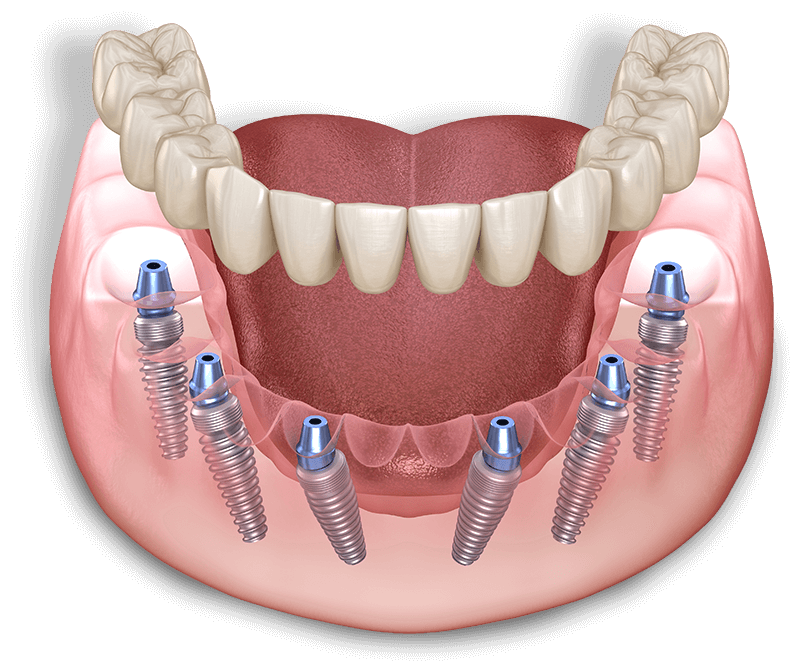
- Full-arch implants (All-on-6) — a full set of upper or lower teeth supported by multiple implants.
Immediate-load or “same-day” implants attach a temporary prosthetic at the time of surgery when stability and bone allow. Your dentist will confirm if immediate-load is appropriate during planning.
Who Is A Good Candidate For Dental Implants In Fort Lauderdale?
Good candidates for dental implants in Fort Lauderdale generally have healthy gums, adequate bone volume, and good overall health. Key factors your dentist reviews include bone density, gum condition, uncontrolled chronic illnesses (like poorly controlled diabetes), smoking, and oral hygiene habits.
Age is less important than health and bone quality. Many older adults are excellent candidates. A consultation with 3D CBCT imaging and digital planning determines candidacy and shows whether bone grafting or sinus lifts are needed before implants.
Step-By-Step Dental Implant Procedure In Fort Lauderdale
The typical dental implant procedure follows three main phases: pre-op planning, surgery, and the prosthetic phase.
- Pre-op: Exam, medical review, CBCT scan, digital planning, and smile simulation to design the final result.
- Surgery: Guided implant placement using surgical guides from the digital plan. Bone grafts are added if bone is insufficient. If conditions allow, an immediate-load restoration may be placed the same day.
- Prosthetic phase: After healing (weeks to months), abutments are placed and final crowns or full-arch prosthetics are fitted. For full-arch cases, provisional teeth may be used until the final prosthetic is finished.
Timeline varies: single implants may finish in a few months, while complex full-arch cases can be done same-day with immediate-load protocols or staged over several months. Your Fort Lauderdale implant team will explain the timeline based on your plan.
Risks, Healing, And Aftercare For Dental Implants In Fort Lauderdale
Risks are low when treatment uses CBCT imaging and guided surgery. Possible issues include infection, implant failure, nerve irritation, or sinus complications. Careful planning and sterile technique reduce these risks.
Expect some pain, swelling, and a soft-food diet for several days after surgery. Follow these aftercare steps:
- Use prescribed medications and ice for the first 48–72 hours.
- Eat soft foods and avoid heavy chewing on the implant site until advised.
- Maintain gentle oral hygiene; use recommended rinses and avoid smoking.
- Attend follow-up visits to check healing and osseointegration.
Long-term care includes daily brushing and flossing, regular dental check-ups, and professional cleanings. Report persistent pain, looseness, or swelling to your dentist right away.
Costs, Insurance, And Payment Options For Dental Implants In Fort Lauderdale
Costs vary widely. Major factors: number of implants, need for bone grafting, prosthetic type (single crown vs. full-arch), and lab work. Full-arch restorations cost more but replace an entire smile and can be more cost-effective than many single implants.
Most dental insurance covers parts of the treatment (like extractions or crowns) but often excludes the full implant cost. Check your plan and ask for a pre-treatment estimate. Financing options commonly include in-house payment plans, third-party medical credit, and CareCredit-style loans. Compare total value—warranty, lab quality, and provider experience—not just price.
Why Choose In A Day Smile Dental Implant Centers For Full-Arch Dental Implants
In A Day Smile Dental Implant Centers in Fort Lauderdale specializes in immediate-load full-arch care led by prosthodontist Dr. Burak Taskonak. Dr. Taskonak places and restores implants and has extensive experience with full-mouth reconstructions.
- State-of-the-art CBCT and 3D planning for precise, guided surgery.
- In-house dental lab and milling for same-day prosthetics and tight quality control.
- Immediate-load (same-day) restorations for fast results when appropriate.
- Lifetime warranty on implant restorations, Best Price Guarantee, and flexible financing.
- All-inclusive travel dentistry packages for patients traveling to Fort Lauderdale for care.
To request a consultation or a 3D evaluation, contact In A Day Smile to schedule a CBCT scan and treatment planning session with the team.
Frequently Asked Questions About Dental Implants In Fort Lauderdale
How Long Do Dental Implants Last?
With good care, dental implants can last decades or a lifetime. The crown or prosthetic may need replacement after 10–15 years, but the implant post often remains stable long-term.
Does The Dental Implant Procedure Hurt?
Most patients report manageable discomfort controlled with local anesthesia, sedation options, and short-term pain medication. Swelling and soreness are normal for a few days.
Can Anyone Get Same-Day Implants?
Not everyone qualifies. Same-day or immediate-load implants require sufficient bone, low infection risk, and careful planning. A CBCT scan and exam determine eligibility.
What Are The Alternatives If I’m Not A Candidate?
Alternatives include removable dentures, implant-supported overdentures, or staged implant treatment after bone grafting. Your dentist will recommend the best path based on your health and goals.