This guide will help you understand the different types of implants and how to choose the right option for your needs. You’ll learn the main categories of dental implants, when each type is used, and practical factors to consider for types of implants in Fort Lauderdale, FL. By the end you’ll have clear next steps for a consult and treatment plan.
Common Types Of Implants: An Overview
There are several common implant styles that serve different situations. Knowing the basics helps you talk with a dentist and pick the safest, most predictable option for your mouth.
Endosteal (Root-Form) Implants
Endosteal implants are the most common type. They look like small screws placed directly into the jawbone to act as artificial roots. Typical uses include replacing one tooth, several adjacent teeth with individual implants, or supporting bridges. Benefits include strong stability, natural chewing function, and wide availability of proven materials.
Subperiosteal Implants
Subperiosteal implants sit on top of the jawbone but under the gum. They are used when jawbone height is too low for endosteal implants and bone grafting is not desirable. Pros: avoid major bone grafts and provide support for dentures. Cons: less common today, may have higher long-term risks than endosteal options.
Zygomatic Implants
Zygomatic implants anchor into the cheekbone (zygoma) instead of the upper jaw. They are considered for severe upper-jaw bone loss when traditional implants won’t hold. These implants help patients avoid long grafting procedures and can support full-arch restorations for those otherwise not candidates.
Mini Dental Implants
Mini dental implants are narrower than standard implants. Typical uses include stabilizing loose dentures, short-term solutions, or when space is limited. Advantages are lower cost and less invasive placement. Limitations: not always suitable for full chewing loads and may not last as long as standard implants.
Which Types Of Implants In Fort Lauderdale, FL Are Best For Your Situation?
Number Of Missing Teeth
One tooth: a single endosteal implant with a crown is often best. Several teeth: implant-supported bridges or multiple endosteal implants work well. Full arch: full-arch solutions like All-on-4/All-on-6 or zygomatic implants may be preferred for complete restorations.
Bone Volume And Health
Good bone volume usually supports standard endosteal implants. Low bone height in the lower or upper jaw may lead to subperiosteal, zygomatic implants, or bone grafting before standard implants. A CBCT scan helps measure bone and guide choices.
Medical History And Habits
Medical conditions and habits affect implant choices. Smoking, uncontrolled diabetes, certain medications, and past radiation can raise risks. Your implant team will review health history and may recommend medical clearance or modify treatment plans.
Aesthetic Goals And Function
If you need strong chewing capacity and a natural look, full-arch implant solutions and implant-supported bridges are preferred. For smaller cosmetic fixes, single implants offer excellent esthetics and function with minimal impact on adjacent teeth.
Immediate-Load And Full-Arch Solutions: All-On-4, All-On-6, And Other Full-Arch Types Of Implants
All-On-4 Vs All-On-6
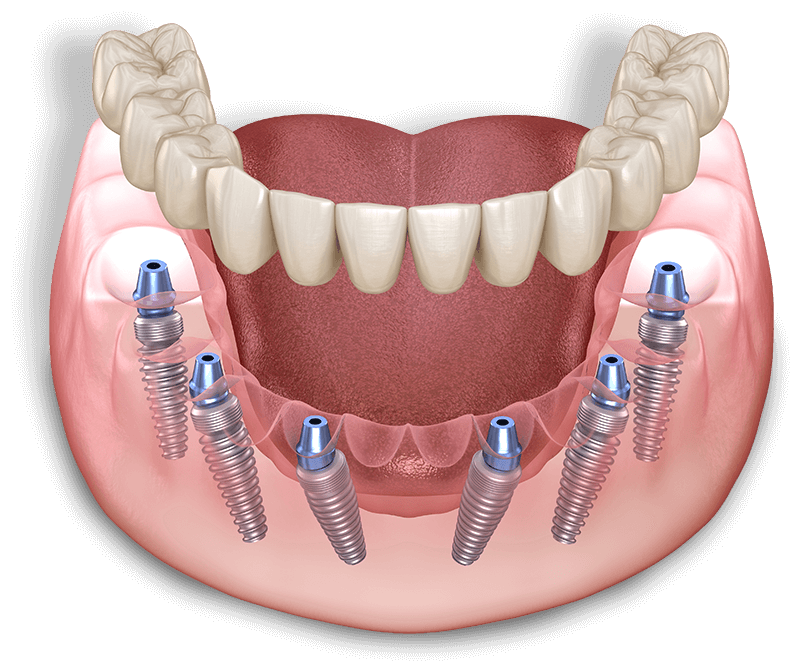
All-on-4 uses four implants to support a full arch; All-on-6 uses six implants for extra support. All-on-4 can reduce cost and often avoids bone grafts. All-on-6 provides more stability and redundancy, which may benefit heavy chewers or reduced bone volume. Candidate suitability depends on bone quality and desired longevity.
Implant-Supported Bridges And Hybrid Prosthetics
These use multiple implants to support a fixed or removable prosthesis. They differ from single implants by replacing several teeth with one connected prosthetic, offering strong function and a natural appearance for partial or full arches.
Same-Day Implants And Smile Restoration
“Immediate-load” or same-day implants allow a temporary fixed prosthesis the same day as implant placement. Benefits: fast esthetic results and fewer visits. Limitations: not every case is suitable—stability at placement and bone quality are critical for success.
Risks, Longevity, And Maintenance For Different Types Of Implants
Expected Lifespan And Factors That Affect Longevity
Implants can last decades with good care. Longevity depends on oral hygiene, bone health, implant materials, and regular dental visits. Smoking and untreated gum disease shorten implant life.
Common Risks And How They Vary By Implant Type
Risks include infection, implant failure, sinus or nerve issues, and prosthetic complications. Complex types like zygomatic implants and immediate-load cases carry higher technical demands and require experienced teams to reduce risk.
Care And Follow-Up Schedule
Home care: brush twice daily, clean around implants, and avoid hard habits. Professional care: regular checkups and cleanings every 3–6 months initially, then as recommended. Early follow-up after surgery ensures healing and prosthetic adjustments.
Costs And Financing For Types Of Implants In Fort Lauderdale, FL
Typical price ranges vary:
- Single endosteal implant with crown: commonly mid-range cost (varies by materials and labs).
- Mini implants: lower cost but limited use.
- All-on-4/All-on-6 full-arch solutions: higher investment but replace an entire arch.
- Zygomatic implants: among the higher-cost options due to complexity.
Additional procedures—bone grafts, extractions, CT scans, sedation—increase total cost. Ask about financing plans, warranties, and what the quoted price includes during your consult.
Why Choose A Specialized Center For Complex Types Of Implants
Complex implant work benefits from a focused team and advanced tech. In A Day Smile Dental Implant Centers in Fort Lauderdale, FL offers same-day full-arch solutions and a team led by prosthodontist Dr. Burak Taskonak. Their approach emphasizes predictable results and streamlined care while keeping praise brief and focused on patient benefit.
Key Technologies That Improve Outcomes
- Cone Beam CT (CBCT) for 3D planning
- 3D computer placement modeling and guided surgery
- In-house lab, milling, and 3D printing for fast, accurate prosthetics
- Smile simulation to preview results
What To Expect At Your Consultation
Your visit will include medical and dental history, oral exam, CBCT imaging, and a treatment plan with options, timelines, and costs. A good consult answers your questions about which types of implants in Fort Lauderdale, FL will meet your goals.
If you’re ready to learn which types of implants in Fort Lauderdale, FL are right for you, schedule a consult to review options, costs, and a personalized plan. A consult will clarify whether single implants, mini implants, All-on-4/All-on-6, or zygomatic solutions best match your needs.